Northern Ethiopia is one of the country’s richest regions for history, culture, religion, architecture, and mountain landscapes.
This is the Ethiopia of ancient kingdoms and medieval churches.
It is the land of Aksum’s monumental stelae, Lalibela’s rock-hewn churches, Gondar’s castles, Tigray’s extraordinary churches, and the dramatic mountains of Simien.
For travelers interested in Ethiopian history and culture, a Northern Ethiopia tour can provide an extraordinary journey through thousands of years of human history.
UNESCO currently recognizes several major Ethiopian heritage sites in the north, including Aksum, Lalibela, Fasil Ghebbi in Gondar, and Simien National Park.
Why Visit Northern Ethiopia?
Northern Ethiopia is fundamentally different from the country’s southern cultural landscapes.
Here, the journey is heavily connected to the history of Ethiopian civilization and Christianity, while the mountains create some of the most dramatic scenery in the country.
Travelers can move from ancient archaeological sites to medieval religious architecture and then into high-altitude mountain landscapes.
It is possible to build a Northern Ethiopia itinerary around:
- History
- Archaeology
- Churches
- Religious heritage
- Mountains
- Trekking
- Wildlife
- Photography
- Local culture
The region rewards travelers who want more than a simple sightseeing checklist.
Aksum: The Ancient Heart of Ethiopia
Aksum is one of the most important historical destinations in Ethiopia.
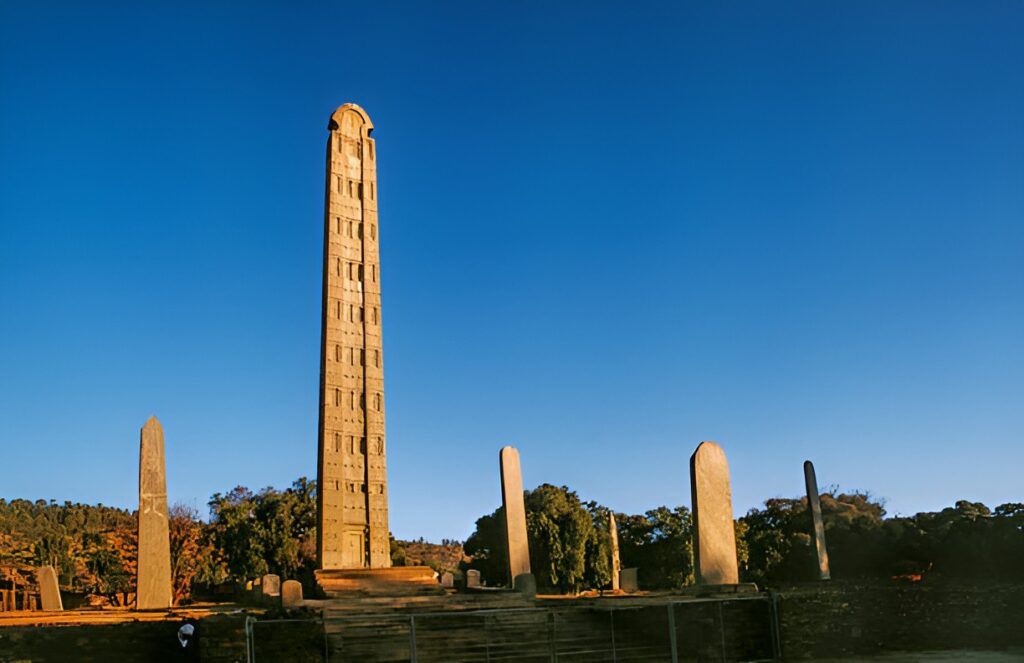
UNESCO describes the ancient city as the center of the powerful Aksumite Kingdom, which flourished from roughly the first to eighth centuries AD. The kingdom stood at a crossroads connecting Africa, Arabia, and the Greco-Roman world.
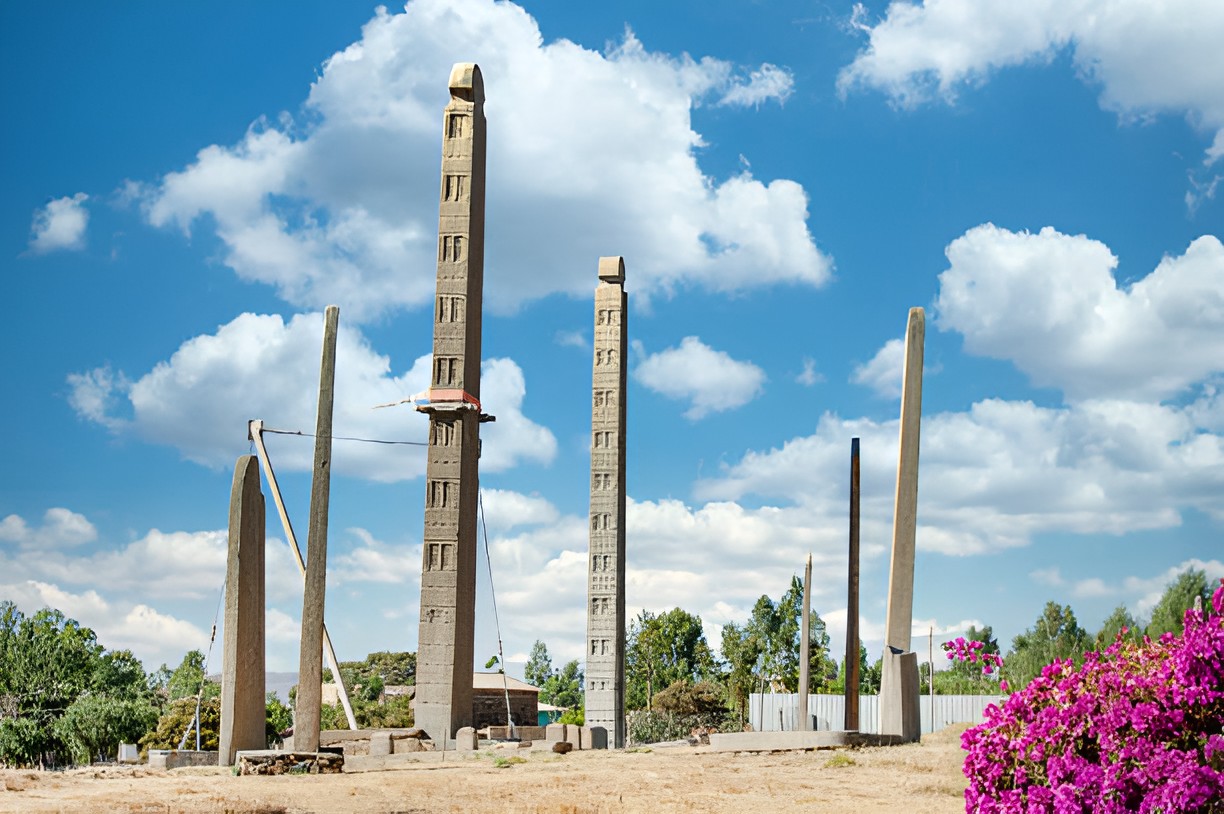
The archaeological remains include enormous stone stelae, royal tombs, ancient structures, and ruins associated with the ancient kingdom.
The famous Aksum stelae are among the most recognizable monuments in Ethiopia.
These monumental stones demonstrate the extraordinary engineering and artistic capabilities of the ancient Aksumite civilization.
Aksum therefore offers something that few destinations can:
the opportunity to stand among physical remains of a civilization that played a major role in the history of the Horn of Africa.
The Kingdom of Aksum
Aksum was not an isolated regional settlement.
The Aksumite Kingdom became an important power in the ancient world and maintained connections across the Red Sea and beyond.
Its location helped it become a major center of trade.
This history explains why Aksum is so important to understanding Ethiopia.
The city represents one of the foundations of Ethiopian civilization.
For travelers interested in archaeology and ancient history, an Aksum tour can therefore be one of the most intellectually rewarding parts of a Northern Ethiopia itinerary.
Lalibela: Medieval Ethiopia Carved Into Stone
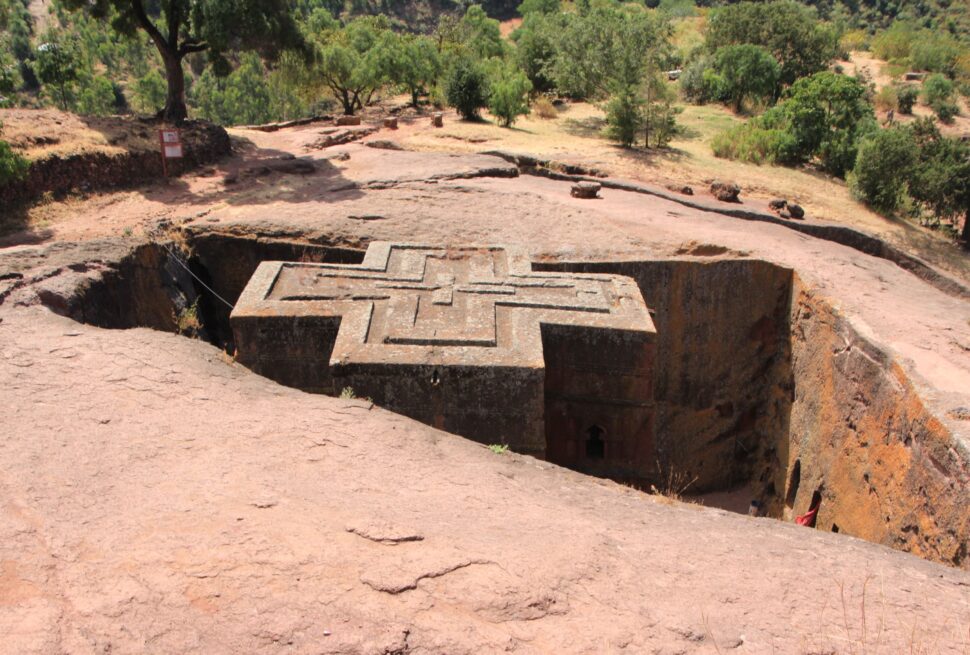
Further south lies Lalibela, home to the famous rock-hewn churches.
Eleven medieval churches were carved directly into the rock, creating one of the most extraordinary architectural landscapes in Africa.
UNESCO recognized the Rock-Hewn Churches of Lalibela as a World Heritage Site in 1978. The site remains an important pilgrimage destination and living religious center.
Lalibela is especially powerful because the churches are not abandoned monuments.
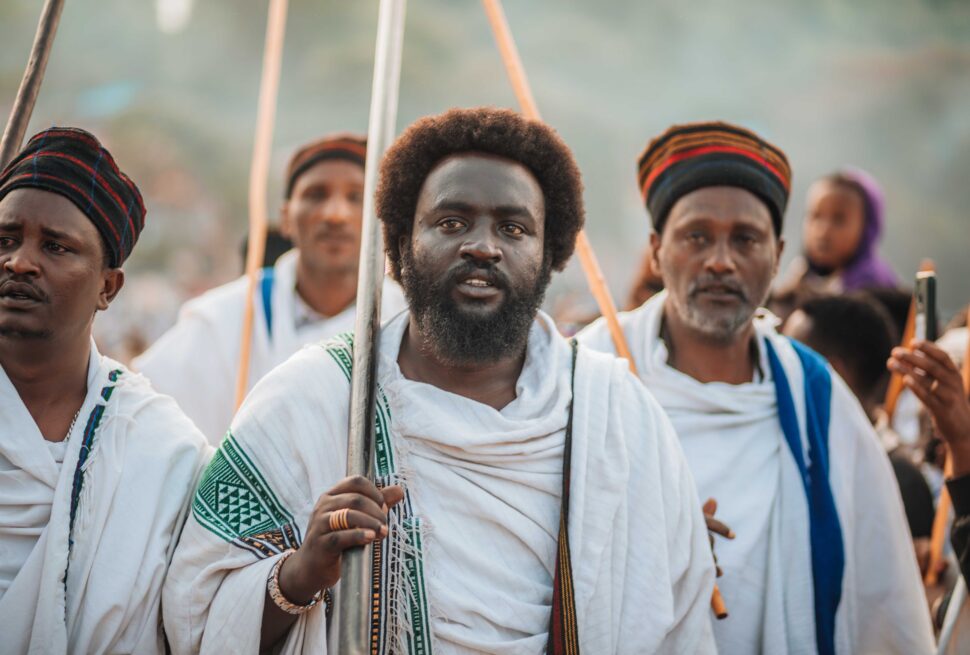
They remain connected to Ethiopian Christian worship and pilgrimage.
A Northern Ethiopia itinerary combining Aksum and Lalibela therefore gives travelers two very different windows into Ethiopian history:
Aksum represents the ancient kingdom.
Lalibela represents medieval Ethiopian Christian civilization.
Gondar: The Royal City
Another major Northern Ethiopia destination is Gondar.
Gondar became the capital of Ethiopia during the 17th century and developed into an important political, cultural, and architectural center.
The city’s most famous historical complex is Fasil Ghebbi, a fortified royal compound recognized by UNESCO as a World Heritage Site. Ethiopia’s UNESCO listing includes Fasil Ghebbi among its twelve World Heritage properties.
The complex contains castles, palaces, churches, and other structures reflecting a distinctive combination of Ethiopian, European, and other architectural influences.
For travelers interested in Ethiopian royal history, Gondar is an essential stop.
Simien Mountains: Ethiopia’s Dramatic Highlands
Northern Ethiopia is not only about history.
The Simien Mountains offer some of the country’s most spectacular natural scenery.
UNESCO describes Simien National Park as a landscape shaped by millions of years of erosion, producing jagged peaks, deep valleys, and cliffs that can drop approximately 1,500 meters.
The scenery is extraordinary.
Long mountain ridges disappear into the distance.
Deep valleys cut through the plateau.
Huge cliffs create dramatic viewpoints.
And the highland environment provides habitat for distinctive Ethiopian wildlife.
Wildlife of the Simien Mountains
One of the biggest reasons to visit the Simien Mountains is the wildlife.
The park is associated with species including:
- Gelada baboons
- Walia ibex
- Ethiopian wolf
The Walia ibex is particularly important because it is found nowhere else in the world. UNESCO identifies it as one of the park’s globally significant species.
The Gelada is another unforgettable sight.
Large groups can sometimes be seen feeding across the highland grasslands, creating one of the most distinctive wildlife experiences in Ethiopia.
Trekking in Northern Ethiopia
For active travelers, Northern Ethiopia offers excellent opportunities for hiking and trekking.
The Simien Mountains are particularly suitable for travelers who want to combine dramatic scenery with physical activity.
Trekking routes can range from relatively accessible walks to multi-day mountain journeys.
The experience is not only about reaching a viewpoint.
Walking through the highlands allows travelers to experience rural landscapes, villages, livestock, agriculture, wildlife, and changing mountain scenery at a much slower pace.
Tigray and Its Rock-Hewn Churches
Northern Ethiopia also contains remarkable rock-hewn churches in the Tigray region.
Many are built into cliffs, mountains, and remote landscapes, making the journey to them part of the experience.
Some require steep climbs or difficult approaches.
These churches demonstrate that the tradition of carving religious structures from rock extends far beyond Lalibela.
For travelers interested in Ethiopian religious architecture, Tigray can add a completely different dimension to a Northern Ethiopia tour.
Travel conditions and access should always be checked before planning specific Tigray routes, and itineraries should be organized with current local conditions in mind.
A Journey Through Ethiopian History
One of the biggest advantages of traveling through Northern Ethiopia is the way different periods of history connect.
You can encounter:
Ancient Aksumite civilization
↓
Medieval Lalibela
↓
Gondar’s royal era
↓
Living Ethiopian religious traditions
↓
Contemporary highland communities
This makes Northern Ethiopia more than a collection of tourist attractions.
It is a journey through time.
How Many Days Do You Need?
There is no single answer because Northern Ethiopia covers a large region.
A shorter itinerary could focus on Lalibela alone.
A longer route could connect Gondar, Simien, Lalibela, and Aksum.
Travelers interested in religious heritage could emphasize churches and monasteries.
Adventure travelers could spend more time trekking in the Simien Mountains.
History enthusiasts could build the itinerary around Aksum, Gondar, Lalibela, and archaeological sites.
The best route depends on the number of days available and current transportation and access conditions.
When Should You Visit Northern Ethiopia?
The best time depends on which part of Northern Ethiopia you are visiting and what you want to do.
For mountain trekking, weather conditions matter greatly.
For religious tourism, travelers may want to plan around important Ethiopian religious celebrations.
For general sightseeing, a flexible itinerary can be built around the season and current travel conditions.
Because conditions can vary by region, it is sensible to confirm local conditions before finalizing a detailed route.
Why Travel With a Local Guide?
Northern Ethiopia contains layers of history that are easy to miss without context.
A monument may look impressive.
A church may look ancient.
A mountain may look dramatic.
But a knowledgeable guide can explain why it matters.
They can connect architecture to history, religious traditions to the landscape, and ancient civilizations to the Ethiopia that exists today.
That context transforms sightseeing into understanding.
Who Should Visit Northern Ethiopia?
Northern Ethiopia is ideal for travelers interested in:
- Ethiopian history
- Ancient civilizations
- Rock-hewn churches
- Ethiopian Christian heritage
- UNESCO World Heritage Sites
- Archaeology
- Mountain trekking
- Wildlife
- Photography
- Culture
- Highland landscapes
It is one of the best regions in Ethiopia for travelers who want a journey combining culture, history, and nature.
Explore Northern Ethiopia Your Way
There is no single “correct” Northern Ethiopia itinerary.
Some travelers want churches.
Others want mountains.
Some want ancient history.
Others want wildlife and trekking.
And some want all of it.
Landscape Ethiopia Tours can build a journey around your available time and interests, combining destinations such as Aksum, Lalibela, Gondar, Simien, and other Northern Ethiopia experiences where appropriate.
Northern Ethiopia is not simply somewhere to visit.
It is a region to explore slowly, because every destination adds another chapter to Ethiopia’s story.
Plan Your Northern Ethiopia Tour
Phone: +251 91 338 4298
Email: info@landscapeethiopiatour.com
Website: landscapeethiopiatour.com